
By AI Landscape Design Team · Editorial policy
How to Create a Landscape Mood Board with a Clear Purpose
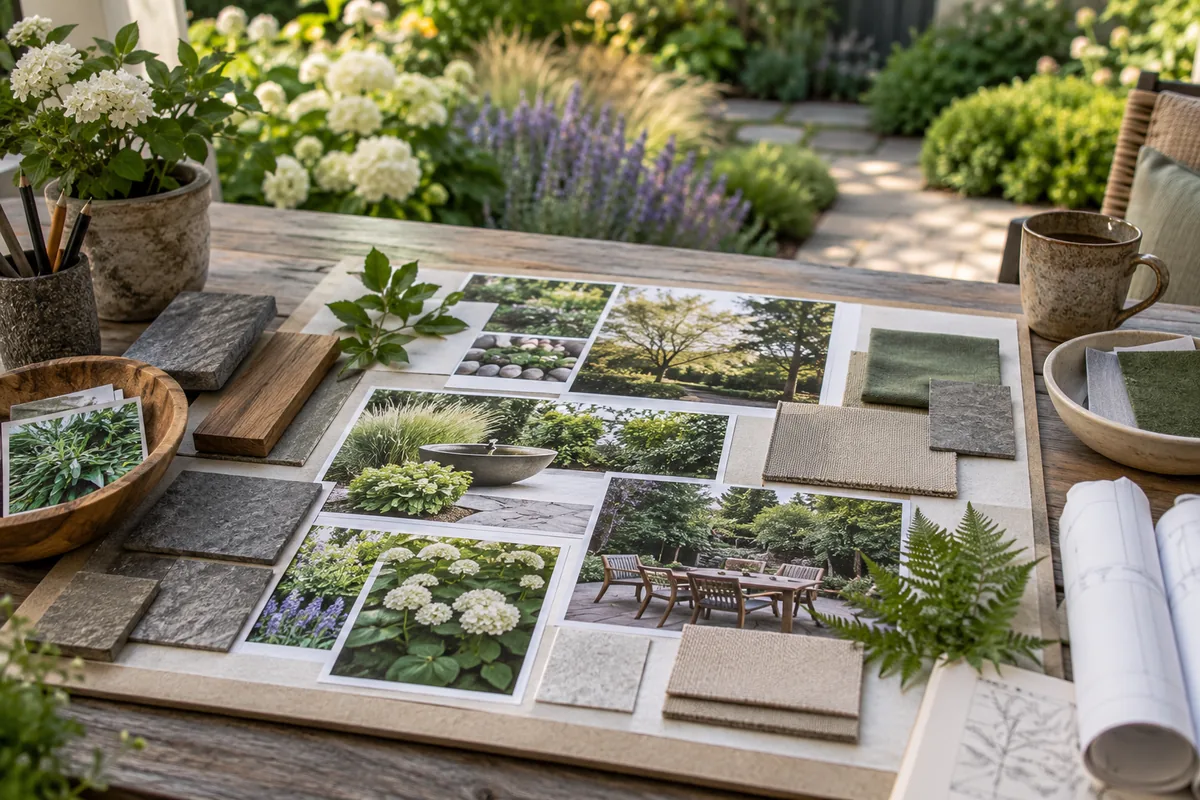
Create a landscape mood board by collecting a small set of references, labeling the specific qualities you like, and grouping them into materials, planting character, and everyday use. Remove contradictory or irrelevant examples until the collection communicates one clear direction. Compare that direction with the actual yard and retain practical constraints. A mood board, including AI concepts, expresses preferences rather than verifying plants, dimensions, construction, or project costs.
Published · 6 min read
Key takeaways
- Annotate references rather than collecting unexplained images.
- Reduce the collection to a coherent visual direction.
- Keep actual site constraints beside the inspiration.
Planning steps
Define what the board needs to explain
Choose the decision the board will support: selecting a visual direction, explaining preferences to a designer, or comparing materials within an existing layout. A collection with no purpose can grow endlessly without improving the project. Write a brief statement of the yard’s main uses and the retained features so those facts remain present while you collect inspiration.
Collect references and annotate the useful detail
Choose examples that show a relevant relationship, such as paving beside planting, repeated foliage, an entrance frame, or furniture arranged with a clear route. Write a short note on each image explaining the part you like. Include what you would change or ignore. This prevents another person from assuming that you want the entire composition, every depicted species, or the building that happens to be in the background.
Group materials, planting, and activities
Organize the references by what they help decide. Materials show surface character and relationships, planting references show form or density, and activity examples show how people use space. Keep exact plant names and construction products provisional until they are researched for the actual site. The board should not convert visual resemblance into a verified specification.
Reduce contradictions and test the visual direction
Review the board against the original purpose and priorities. Identify contradictions: dense planting versus open access, an elaborate formal outline versus limited care, or several unrelated surface palettes. Choose which relationship should lead and remove examples that pull the project elsewhere. You can retain a secondary reference for a specific detail, but label its limited role so it does not become another complete theme.
Share a concise board with the next decision
Keep the final board short enough to discuss feature by feature. Include the purpose statement, annotated references, retained site features, and unresolved questions. Explain which qualities are firm preferences and which remain open to alternatives. This gives a designer or other professional useful information without prescribing an unverified solution.
Define what the board needs to explain
Choose the decision the board will support: selecting a visual direction, explaining preferences to a designer, or comparing materials within an existing layout. A collection with no purpose can grow endlessly without improving the project. Write a brief statement of the yard’s main uses and the retained features so those facts remain present while you collect inspiration.
Look at the house, entrances, boundaries, and existing materials before deciding which references are relevant. An image from a much larger property may be useful for a texture but misleading as a layout model. Label that distinction instead of treating the whole garden as something to reproduce. Keep practical constraints separate from decorative preferences, including access, care, and unresolved site conditions. The board should make a conversation clearer rather than imply that every feature shown belongs in the real yard. Avoid starting with products or plants simply because their photographs are attractive. First identify the visual relationship or experience you want the reference to communicate.
Collect references and annotate the useful detail
Choose examples that show a relevant relationship, such as paving beside planting, repeated foliage, an entrance frame, or furniture arranged with a clear route. Write a short note on each image explaining the part you like. Include what you would change or ignore. This prevents another person from assuming that you want the entire composition, every depicted species, or the building that happens to be in the background.
Use your own yard photographs as reference anchors and handle other material according to the rights relevant to its use. This guide does not give legal advice or authorize redistribution. A private planning collection and a publicly published board can have different requirements. Record source information where it will be useful for later discussion. Keep a limited set rather than adding many near-identical views. An annotated example of something you dislike can be as useful as another positive image when it explains a specific problem, such as crowded circulation, too many materials, or a level of planting care you do not want.
Group materials, planting, and activities
Organize the references by what they help decide. Materials show surface character and relationships, planting references show form or density, and activity examples show how people use space. Keep exact plant names and construction products provisional until they are researched for the actual site. The board should not convert visual resemblance into a verified specification.
Compare planters and stone paving as separate element questions when they drive the collection. Use focal point to describe attention within a view rather than simply selecting another ornament. Consider foliage, mature form, and seasonal absence alongside flower color. Check whether the materials relate to the house and retained surfaces. A palette can be restrained without being identical everywhere, but repeated unrelated patterns may compete. Each group should explain one useful relationship. Remove images that are attractive in isolation but provide no guidance for the actual decision or conflict with the owner’s activities and maintenance preferences.
Reduce contradictions and test the visual direction
Review the board against the original purpose and priorities. Identify contradictions: dense planting versus open access, an elaborate formal outline versus limited care, or several unrelated surface palettes. Choose which relationship should lead and remove examples that pull the project elsewhere. You can retain a secondary reference for a specific detail, but label its limited role so it does not become another complete theme.
Use how to choose a landscape style when style labels help explain the shortlist. AILandscape can explore a broad visual direction from the yard photo, giving another reference to compare with the board. Its result may change existing objects and invent details. AI concepts are for visual exploration; confirm plants, dimensions, drainage, structural support, and real costs independently. Do not use generated foliage to identify a species or paving to calculate quantities. Mark the concept as inspiration and record where it differs from the actual site. The test is whether the direction communicates the preference clearly, not whether the image looks ready to build.
Share a concise board with the next decision
Keep the final board short enough to discuss feature by feature. Include the purpose statement, annotated references, retained site features, and unresolved questions. Explain which qualities are firm preferences and which remain open to alternatives. This gives a designer or other professional useful information without prescribing an unverified solution. A good board should still be understandable when one attractive reference is removed.
Pair the images with reliable site information and appropriate local checks before moving toward purchases. Confirm USDA hardiness, soil, light, mature growth, invasive status, and toxicity for any real planting candidates. Built surfaces, drainage, structures, and electrical details need qualified professional review. Revise the board when those checks rule out a detail instead of searching for a way to preserve an unsuitable image literally. Save the earlier collection separately if useful, but present the current direction clearly. The mood board succeeds as a communication tool: it explains why certain visual relationships matter while acknowledging that their feasible realization must be worked out for the actual yard.
Frequently asked questions
How many images should a mood board contain?
There is no universal number, but every image should explain a useful preference or decision. Keep the collection manageable enough to discuss individually. Remove redundant or contradictory examples and annotate the detail that matters rather than treating the whole pictured garden as a requirement.
Can a mood board include AI-generated images?
AI images can be included as labeled visual references. Note invented or changed features and do not interpret plants, dimensions, construction, or costs as verified. Pair the concept with real site information and appropriate professional assessment before making purchasing or installation decisions.
Is a mood board a material specification?
A mood board communicates appearance and preferences rather than specifying exact products or installation. Research actual materials and plants separately for the site. Qualified professionals need to confirm suitability, technical requirements, and the information required for real purchases or construction.
Sources
Related reading
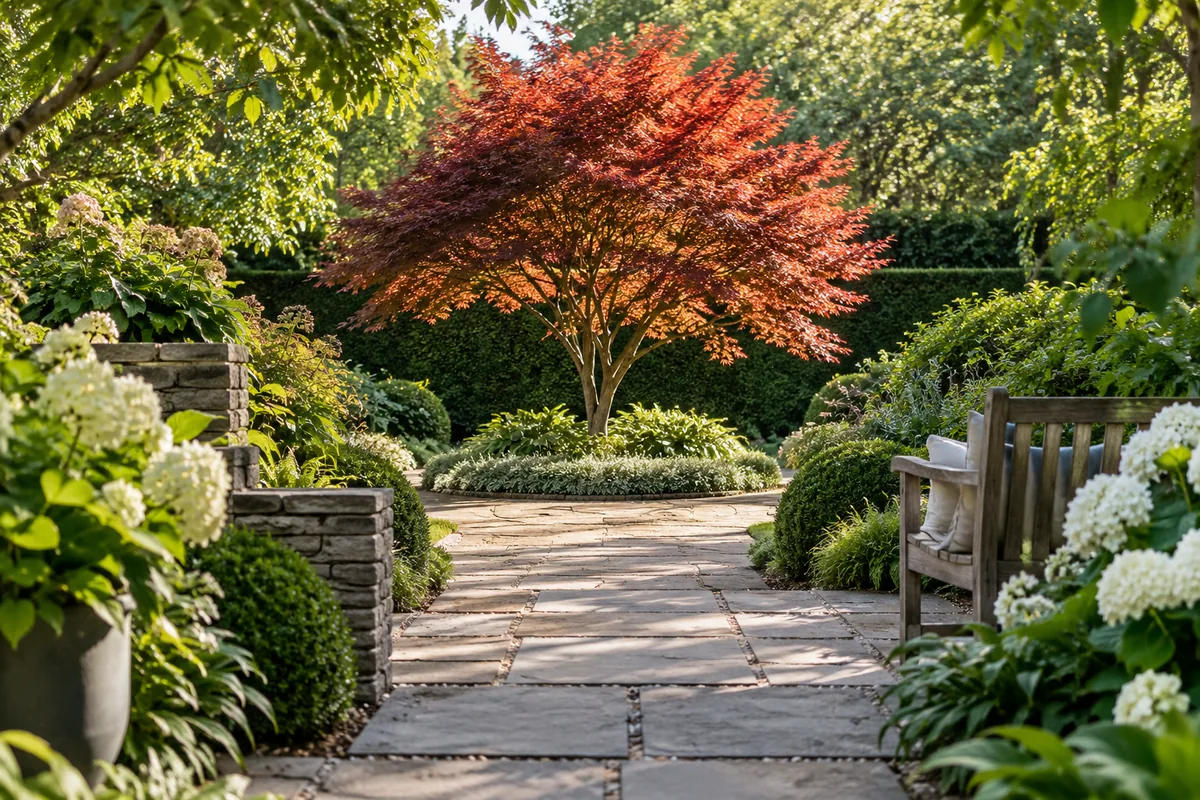
What Is Focal Point in Landscape Design?
Learn what focal point means in landscape design, with a practical yard example, related terms, and the site decisions to check before making changes.
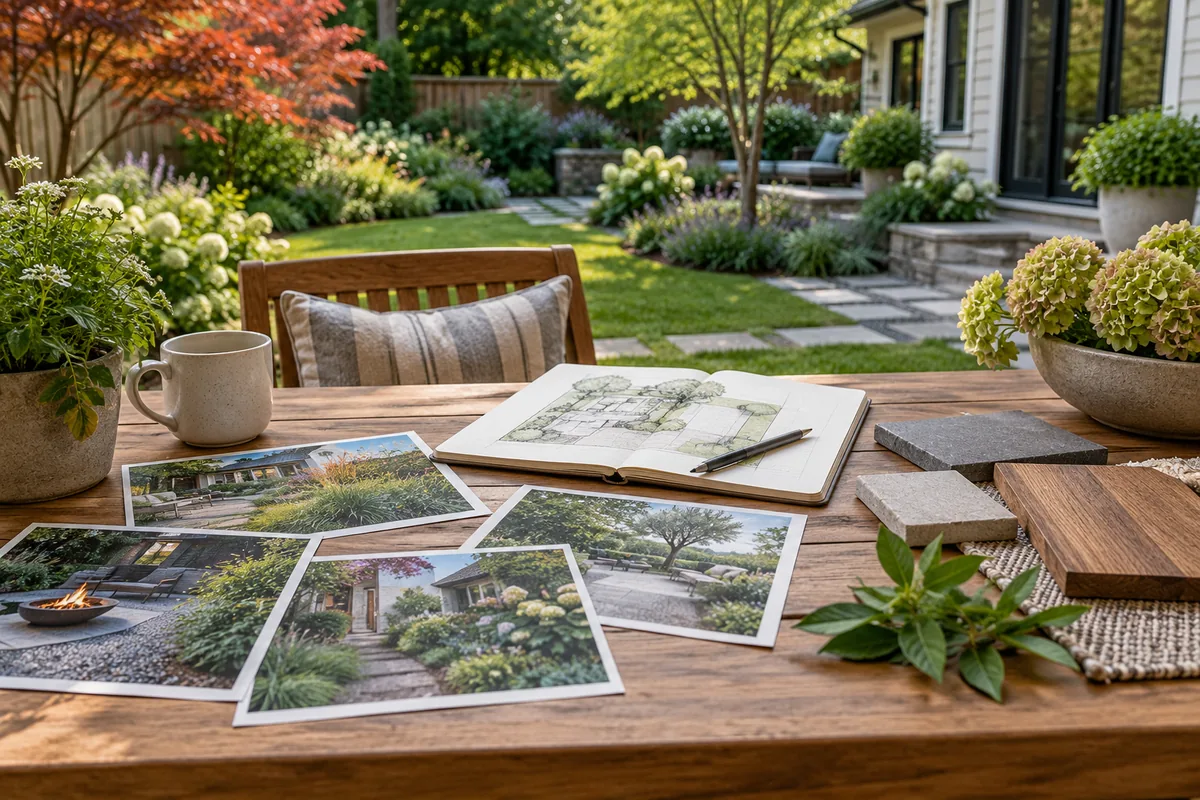
How to Choose a Landscape Style That Fits Your Yard
Choose a landscape style by comparing house lines, everyday uses, maintenance preferences, and local conditions before testing a few visual directions.
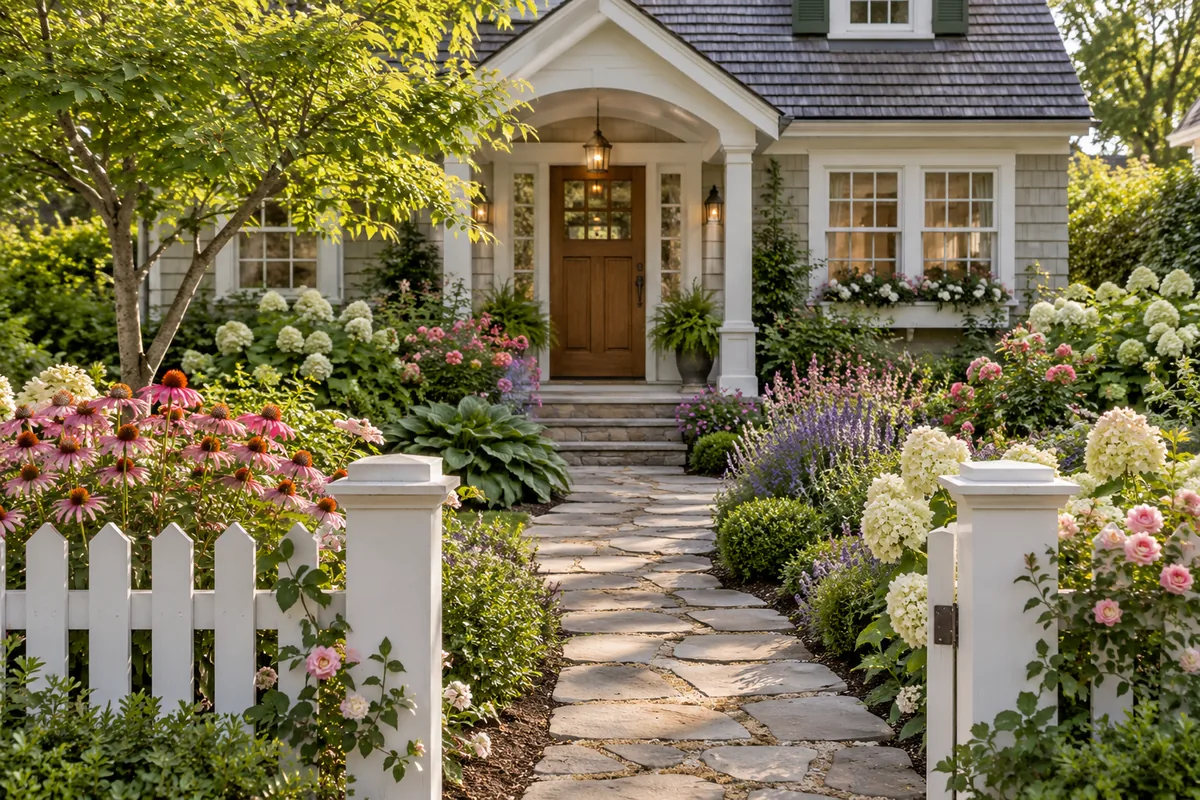
Cottage front yard ideas that welcome visitors through flowers
Find cottage front yard ideas for layered borders, useful gates, brick details, seasonal flower groups, and a welcoming entrance that stays easy to reach.
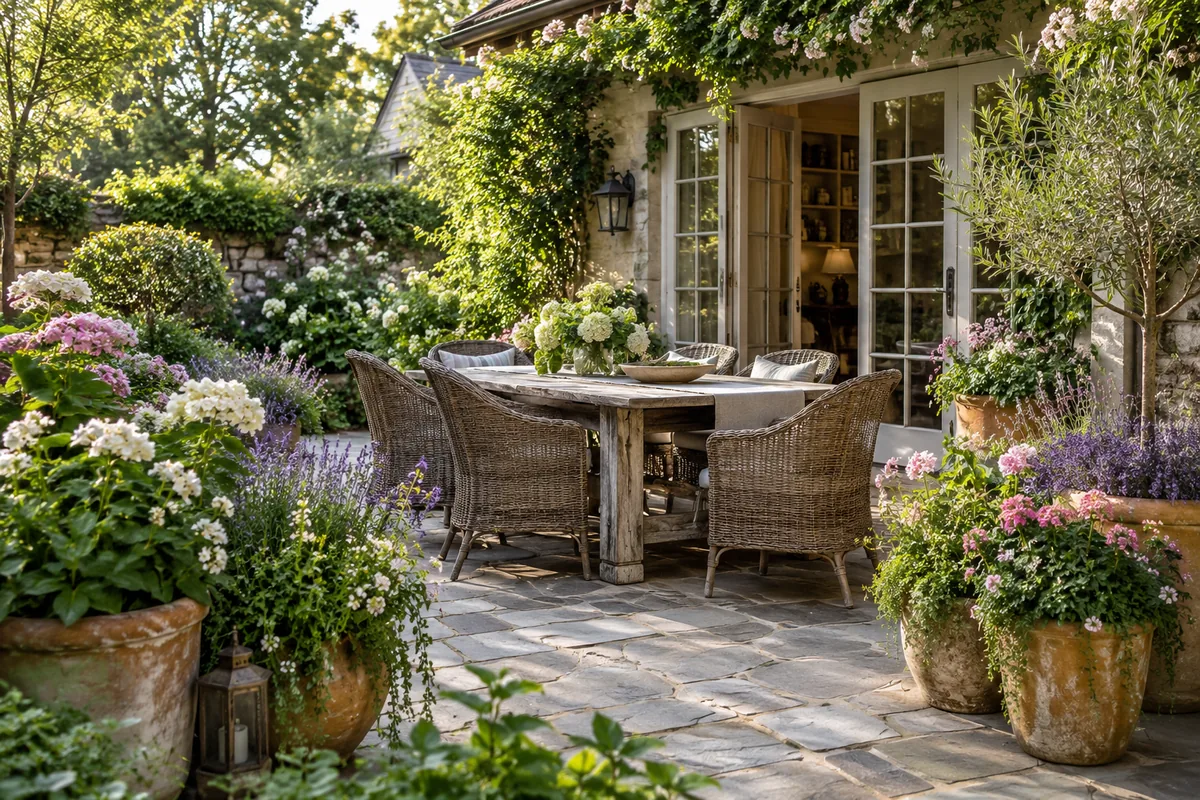
Cottage patio ideas that place flowers around a usable room
Find cottage patio ideas for grouped flowers, stable containers, appropriate climbers, warm materials, and a clear outdoor room that stays comfortable to use.
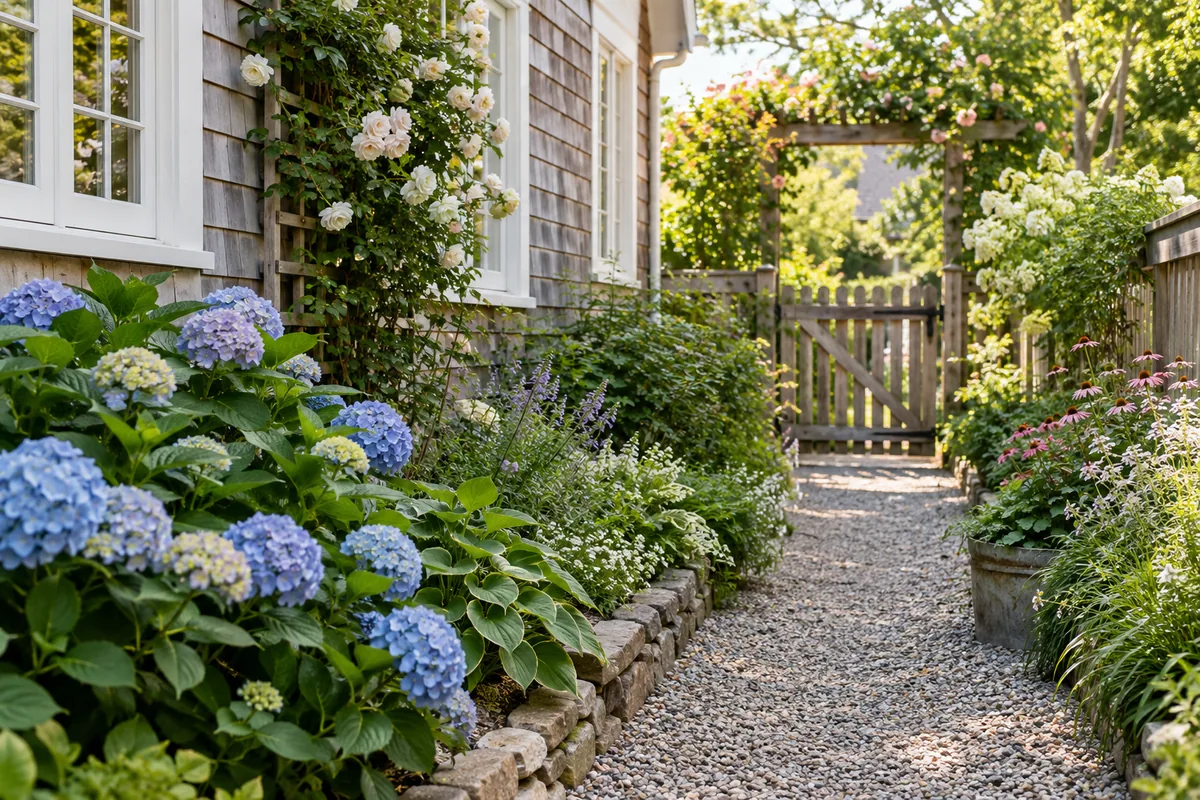
Cottage side yard ideas for flowers beside a working route
Find cottage side yard ideas for connected flowers, appropriate climbers, stable pots, readable gates, and a working route that stays comfortable to use.
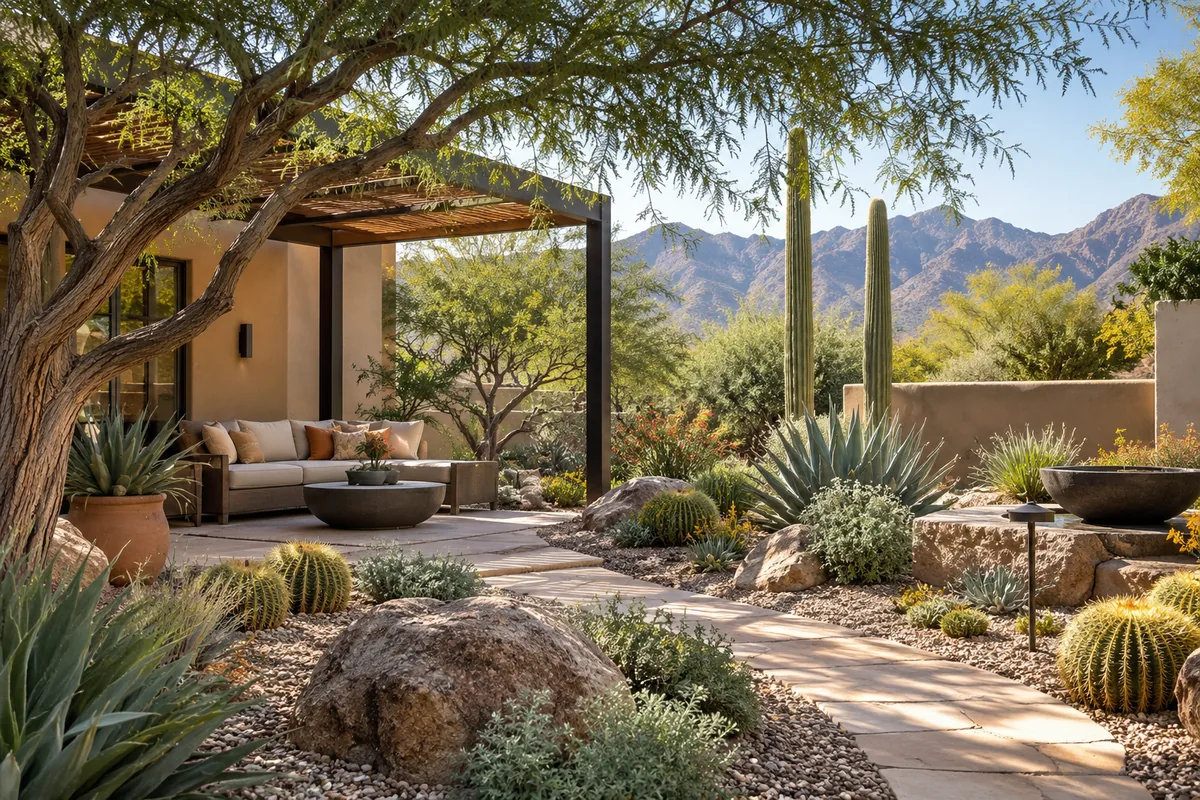
Desert landscape style: shade, stone, and plant form
Understand desert landscape style through plant form, mineral surfaces, useful shade, and heat-aware layouts, while separating its appearance from xeriscaping.