
By AI Landscape Design Team · Editorial policy
Evergreen Trees for Landscaping With Mature Space
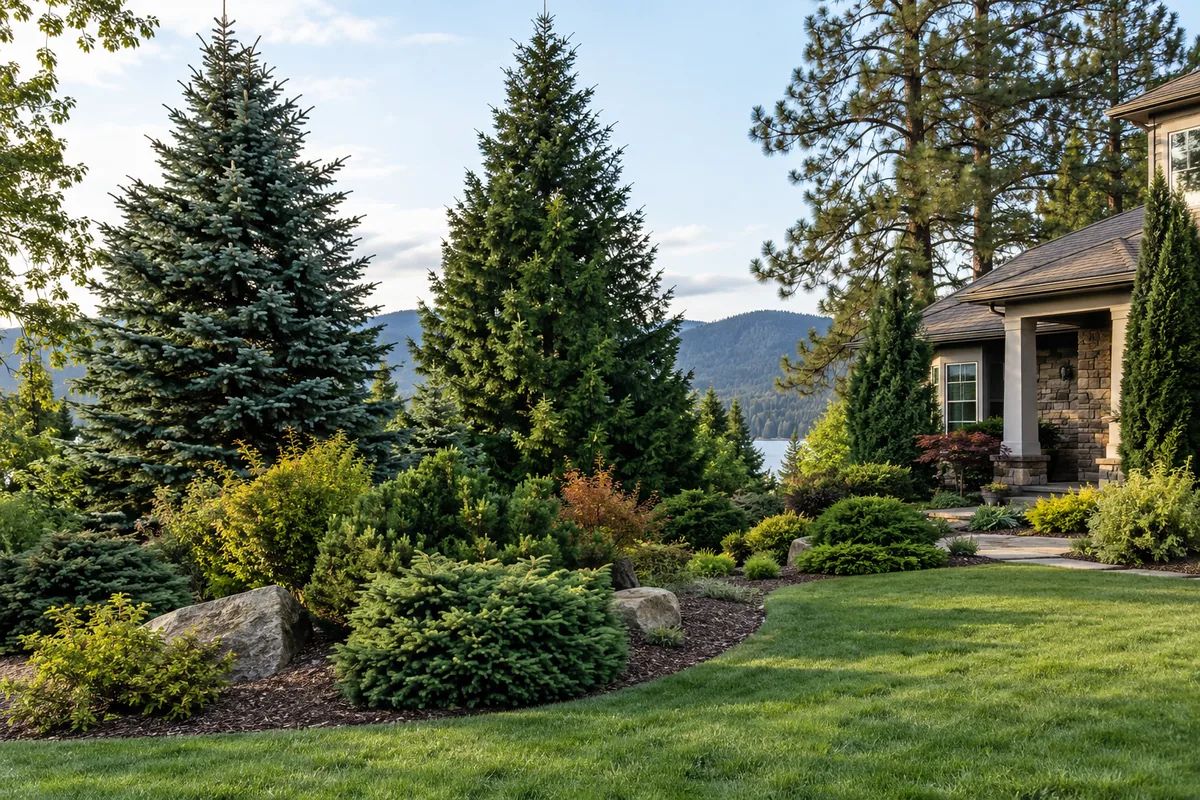
Evergreen trees retain foliage through the year and can provide a lasting visual framework or an assessed screening role. Needle-bearing and broadleaf evergreens are different possibilities, not one interchangeable plant group. Availability and suitability depend on region: review your USDA hardiness zone and local extension guidance, then check mature width, roots, exposure, soil, invasive status, and care before placing a tree.
Published · 6 min read
Key takeaways
- Year-round foliage does not mean a tree fits every screening location.
- Mature width and root relationships need as much attention as height.
- Select locally verified species rather than treating evergreen as a suitability rating.
What should remain visible through the year?
An evergreen can frame a view, provide a strong background, or contribute to a screen where its mature form and the site support that aim. Decide which view or activity needs attention before planting a row. A continuous screen can block a valued outlook or daylight as well as an unwanted view. Ask a qualified local adviser about the actual exposure and spacing needs of the selected trees. Do not assume a dense-looking concept establishes wind protection. The tree's function should be described precisely enough to test at maturity, rather than relying on the broad promise that year-round leaves automatically improve privacy and comfort everywhere.
Which example types are worth investigating?
The following names illustrate roles to discuss, not guaranteed selections for every US yard. Confirm the exact species, cultivar, regional suitability, and adult form before purchase.
- Eastern white pine: a substantial needle-foliage canopy role where appropriate.
- Eastern redcedar: a locally assessed screening or structural option.
- American holly: a broadleaf evergreen form with species-specific care and pet considerations.
- Southern magnolia: a strong broadleaf canopy where climate and space fit.
- Spruce: a needle-bearing structural form, with the actual species carefully chosen.
- Arborvitae: a screening option whose mature width and local conditions need review.
- Fir: a distinct evergreen outline for a suitable site and identified species.
Availability varies by region. Bring the intended visual function to the local extension service rather than selecting a generic evergreen from a photo.
Why is mature width easy to underestimate?
A narrow-looking nursery tree can become much broader than its purchase form suggests. Reserve room for the exact selection's mature outline, roots, access, and the relationship with nearby planting. A row placed too close to a route or wall may later require work that undermines its intended appearance. Do not publish one spacing formula for every evergreen. Ask local professionals about the actual species and site, especially near structures, utilities, or boundaries. Screening should not depend on keeping an unsuitable tree indefinitely small. A useful planting choice is one whose adult size can be accommodated without hiding service points or forcing routine access through branches.
How do needle and broadleaf forms differ visually?
Needle-bearing and broadleaf evergreens can create different texture, scale, and seasonal details. Compare those roles with the house and surrounding vegetation rather than treating every evergreen as a dark background. A broadleaf canopy may feel substantial beside a small terrace, while a particular needle form can create a more distinct vertical rhythm. The exact species still matters more than the category. Ask how it develops and what seasonal litter or care may occur. Evergreen does not mean unchanged or debris-free. Choose the texture for the whole garden and its maintenance capacity rather than copying a dense screen whose species and climate are unknown.
Which conditions need local confirmation?
USDA hardiness zone offers a winter-temperature reference, while light, soil, moisture, wind, and the actual site must also be assessed. Do not translate cold tolerance into a promise of drought, salt, or heat performance. Seek locally appropriate extension guidance and check the actual species' invasive status through regional resources, using USDA National Invasive Species Information Center information as context. A familiar garden tree can be unsuitable somewhere else. Keep identification specific and do not infer a species from a rendered outline. The selection should be grounded in the place where it will grow rather than the marketing label attached to its shape.
What care and household questions matter?
Ask what establishment, observation, pruning, and professional inspection the chosen tree requires locally. Avoid fixed growth-rate or lifespan claims without applicable evidence. Seasonal litter, access around the canopy, and eventual repair or removal all deserve thought. Pets may reach foliage or fallen material, so check the ASPCA toxicity resources and veterinary advice where relevant; year-round greenery is not a safety rating. Keep routes and inspection areas usable. A screen that conceals utilities or traps equipment behind mature branches is inconvenient even if it remains visually dense. The plan should describe how the tree and surrounding space will be cared for after the initial planting.
How should design and construction coexist?
Evergreens can give a modern composition a repeated structure, support native-led screening with regionally suitable species, or create a sheltered-looking Zen backdrop. Their roots and mature forms need respect in any related works. Contact 811 before digging in the United States and clarify private-service locating. Licensed local professionals should review drainage, retaining features, structural changes, and relevant utility or root conflicts. Do not attach structures or add heavy ground work around retained trees solely to match a concept. The evergreen choice belongs in a complete site plan that protects useful existing features and allows future maintenance.
What can a visual concept help evaluate?
Compare the evergreen's mass and view-screening role from real windows and seating positions, while leaving botanical and technical assumptions open. AILandscape offers visual yard exploration; the output does not verify species, mature spread, winter performance, roots, drainage, or construction. Bring the desired role to qualified local advisers and select an actual suitable tree afterward. If the pictured screen would overwhelm the yard at maturity, use a different arrangement rather than expecting continual reduction to preserve it. A successful evergreen idea combines year-round visual purpose with regional verification and sufficient adult space, not a permanent promise inferred from a green silhouette.
Frequently asked questions
Do evergreen trees never lose foliage?
Evergreen describes foliage retained through the year, not a tree that never sheds material or changes. Ask about the actual species' seasonal behavior and care. Plan debris collection and maintenance according to the site rather than assuming year-round greenery means no upkeep.
Can a narrow nursery evergreen stay beside a tight path?
Only if the actual mature form and site relationship support that placement. Check adult width, roots, maintenance access, and nearby utilities with qualified local advice. Nursery proportions do not establish that the eventual tree will fit the same gap.
Is a dense screen automatically a windbreak?
Appearance alone cannot establish a particular protective result. Species, arrangement, exposure, and site conditions matter. Have the intended screening or wind-related role assessed locally rather than treating a generated row of trees as verified performance.
Sources
Related reading
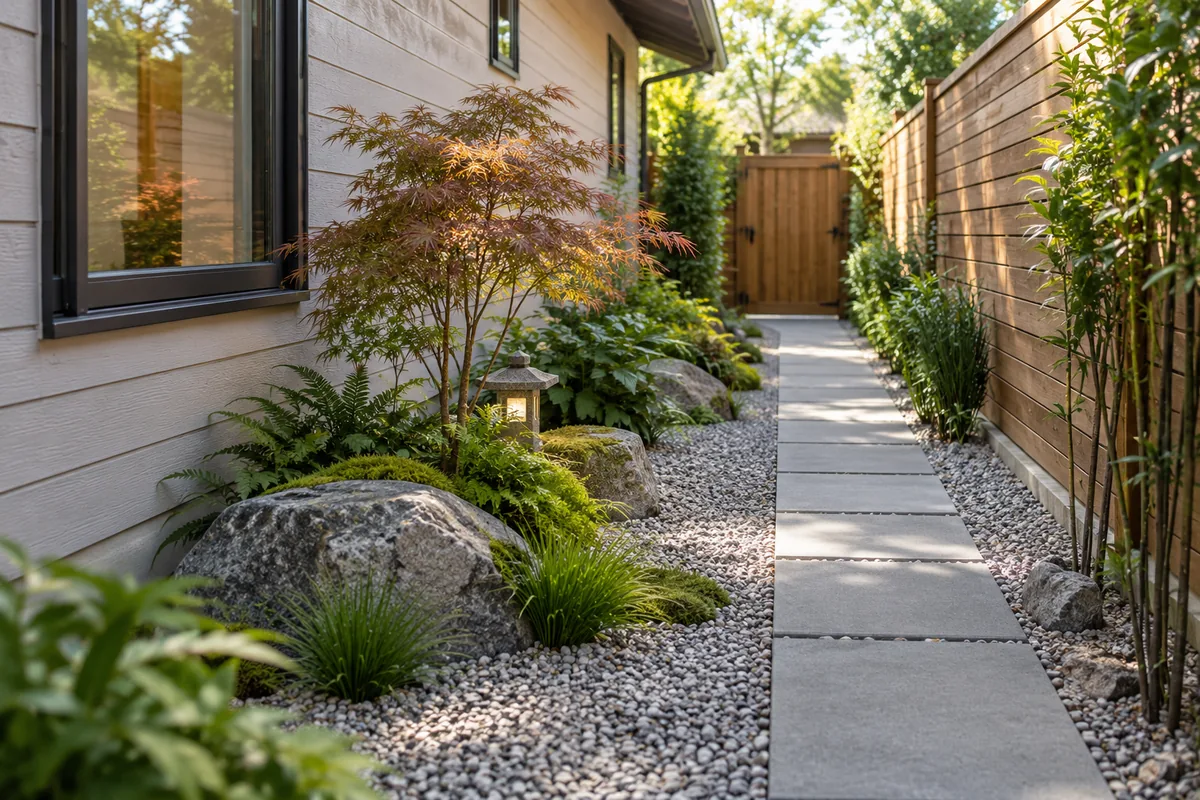
Zen side yard ideas for a viewed composition beside the route
Explore zen side yard ideas for a deliberate window view, contained gravel, quiet planting, and composed stones placed beside essential service circulation.
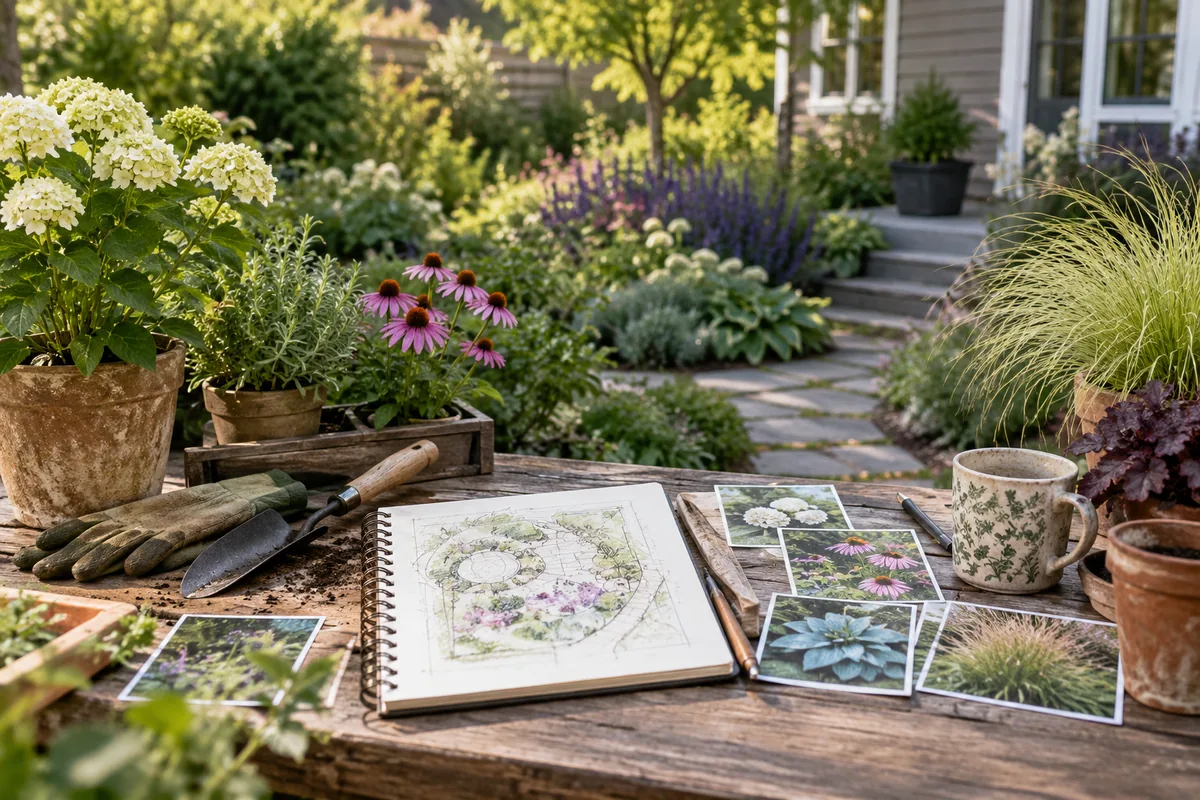
How to Plan a Planting Palette for Your Garden
Plan a planting palette around structure, repeated groups, seasonal interest, and confirmed regional conditions rather than copying species from a garden image.
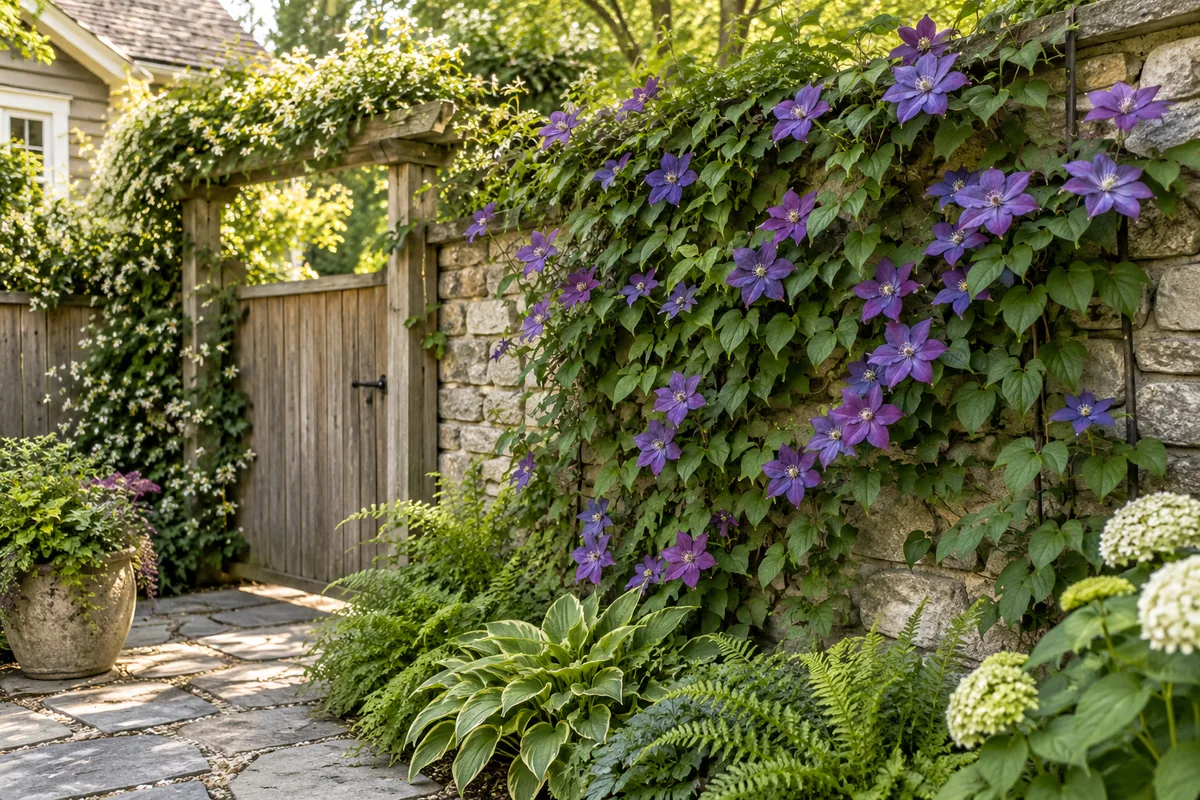
Climbing Vines for Fences and Walls with Suitable Supports
Climbing Vines: Support, Walls, and Local Fit: explore placement, upkeep, and local safety questions before deciding how this feature fits your yard.
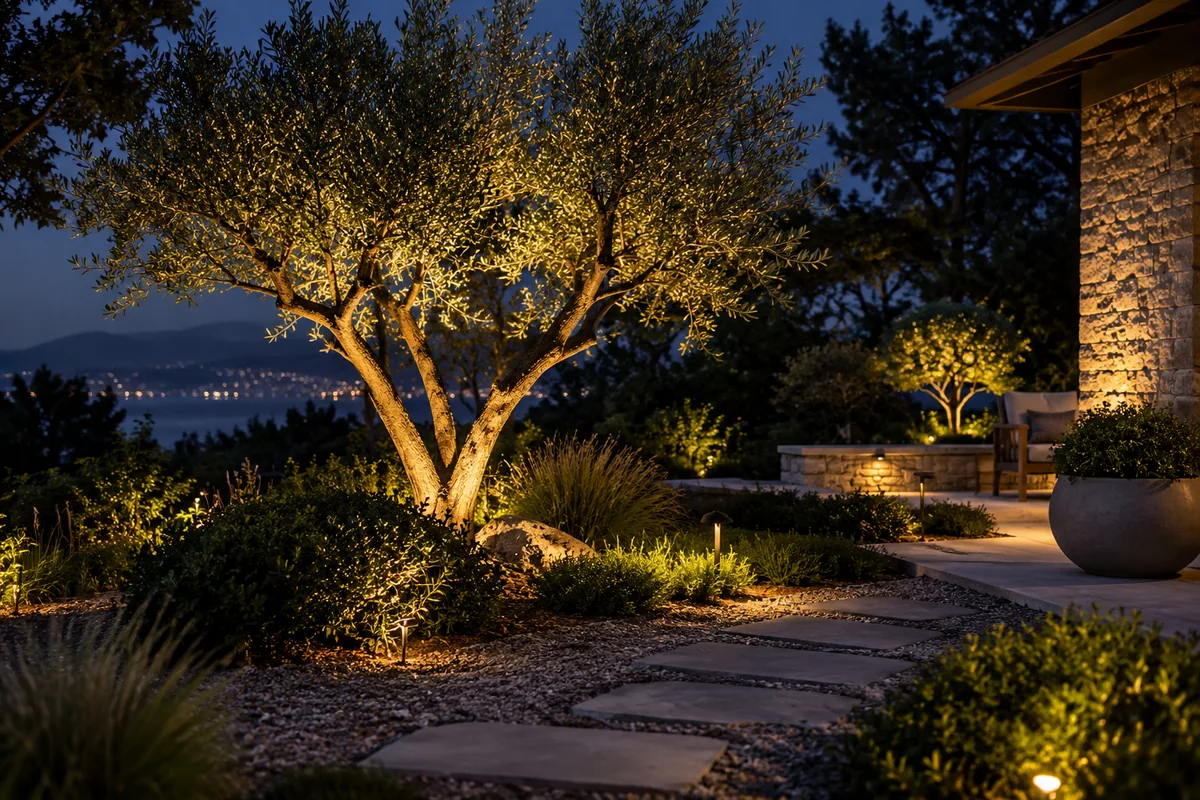
Landscape Accent Lighting That Respects the Night View
Plan landscape accent lighting around selected features, controlled glare, useful viewing positions, appropriate fixtures, and professional electrical review.
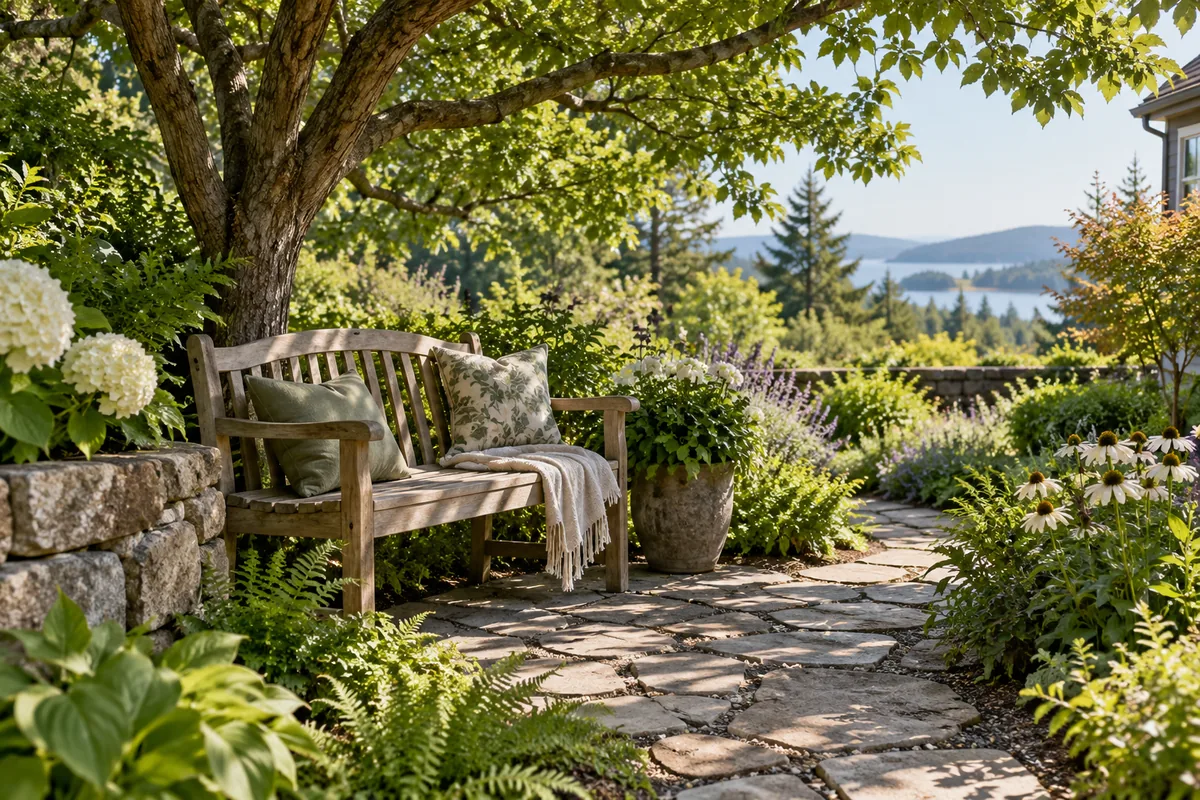
Garden Bench Ideas That Give People a Reason to Sit
Find garden bench ideas for shade, views, and everyday pauses, with practical guidance on seat fit, materials, access, maintenance, and stable placement.
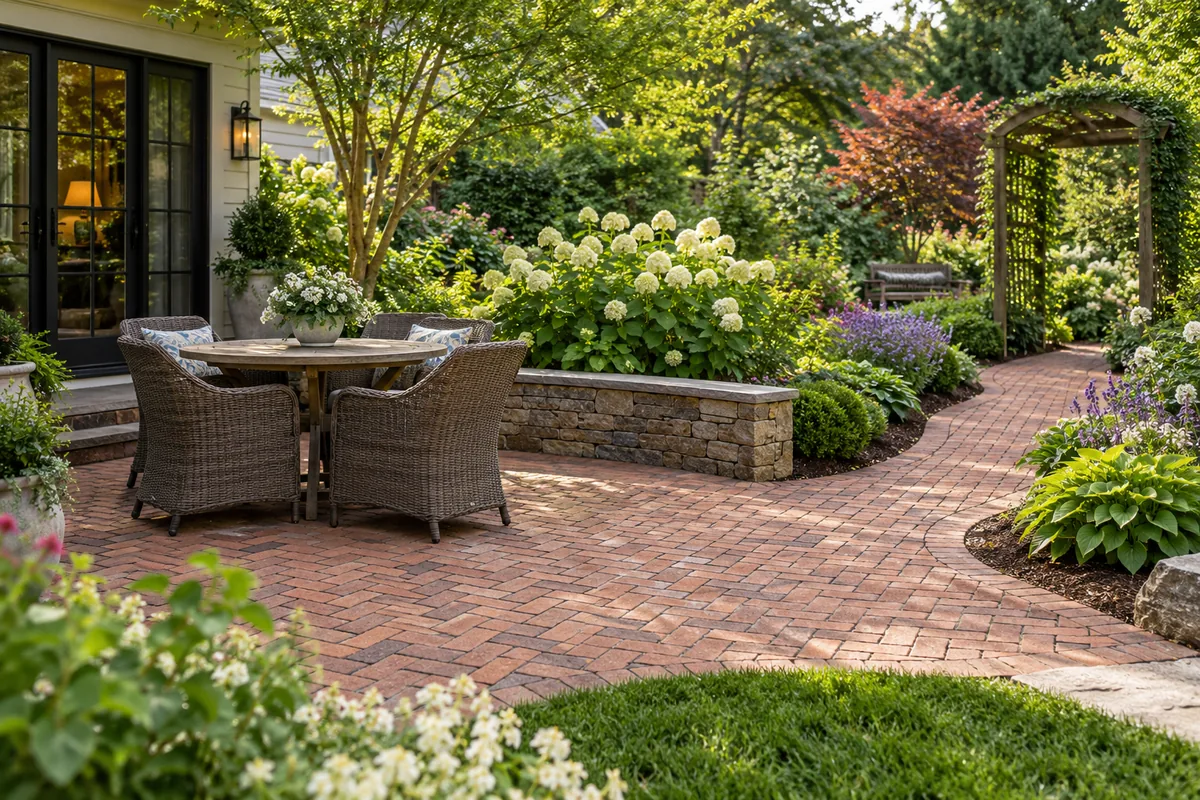
Brick Pavers for Useful Patios and Garden Paths
Brick Pavers for Patios and Paths: explore materials, placement, upkeep, and local safety questions before deciding how this feature fits your yard.